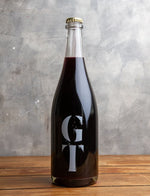
GT Garrut Ancestral Sparkling Red 2019
With its liveliness and deep notes of black fruit, GT Garrut Ancestral recalls the best of Lambrusco, but it is something else entirely. It is an atypical but oh-so-delightful single-varietal wine that deserves a closer look at its original character. Its purplish color with an exuberant pink foam, already expressing notes of blackberry on the nose, is already quite a program. GT Garrut displays beautiful earthy, juicy, and intense qualities; it is very characteristic of black fruits, particularly blackberry (blackberry or tree blackberry). Beautiful notes of red fruits too, and a delicious acidity. It is made entirely from Garrut, also called Monastrell, a Catalan grape variety related to Mourvèdre. This bright, summer-perfect wine is hand-harvested. Entirely destemmed, the grapes macerate for three days with punching down every three hours, and alcoholic fermentation with indigenous yeasts takes place for four months in stainless steel vats, followed by twenty months in oak barrels. Unfiltered, unfined, no sulfites added. GT Garrut smells of family vines, artisanal, unconstrained wine.
Find out morePartida Creus is an important estate, both in terms of winemaking and history—we're talking about the history of the vine in Catalonia. Massimo Marchiori and Antonella Gerosa, originally from Piedmont—and even from the Langhe region, where wine is well-versed—first pursued careers as architects in Barcelona. But the wine bug tickled them, and they soon abandoned the big city and its sophistication for the vineyards of southern Catalonia, in Bonastre in Baix-Penedés. There they found a number of abandoned vineyards planted with a dizzying diversity of traditional Catalan grape varieties, which they passionately revived to save these varieties—and their wines—from oblivion. For them, it's not just a matter of saving their heritage, no: it's a matter of taste and nature. Of natural wines, which they will never stop making from now on on these sandy, poor, clay-limestone or clay-gravel soils, poor and poorly irrigated, where the vines suffer to produce their best juice. Massimo and Antonella practice organic, biodynamic, entirely manual and natural viticulture in order to give new life to these wines. Vinyater, sumoll, garrut, monastrell, ull de perdiu, ull de llebre, sumoll, queixal de llop, cariñena, trepat, ceciat parent, maccabeu, parellada, pansé, vinel·lo, bobal, cartoixà vermell or xarel·lo: it is a true conservatory of the native Catalan grape varieties that Partida Creus cares for. There is also Moscatel, Grenache, Merlot and Cabernet (among others). Few wineries can boast of growing so many different grape varieties. The wines reflect this diversity, with winemakers striving to best convey the signature of the soil and the grape variety: single varietals are common among them, alongside very rich blends, all in the styles dear to Catalonia: still wine, "ancestral" sparkling wine, and even vermouth. The bottles themselves are works of art: bare glass, simply marked with two large stenciled initials that indicate the cuvée. The wines, fresh, vibrant, lush but always straightforward and impeccably juicy and fruity, breathe life. The arrival of a Partida Creus at the table always elicits cries of satisfaction.