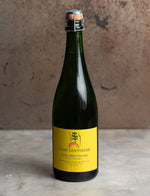
Brut Nature Blanc de Noirs Malvasia Sparkling White 2020
This sparkling cava from Catalonia is unrivaled in its distinction and stands up to even the most respectable champagnes, despite being classified as a Vino de Mesa (table wine). Made entirely from Malvasia, an ancient Mediterranean grape variety that thrives particularly well on the limestone soils of Sitges, this festive wine offers fine, creamy bubbles and a pale gold color, deeper than most wines of its style. Its olfactory notes of white fruits and lemon peel, its creamy, intense, and fresh flavor with tropical accents have everything to seduce. Its aromatic persistence is remarkable. It can be tried with foie gras, for example, but also with so many other delectable things!
To find out more
Purity, elegance, and a crisp minerality due to limestone characterize the productions of Clos Lentiscus. The note of controlled oxidation, when it is felt, does not dominate the tasting, and the wines are never deviant. The cavas are known for being exuberant, but those of Clos Lentiscus never have more than two grams of residual sugar per liter. The estate also produces still wines, red, white, and rosé. Located in Sitges, Catalonia, Clos Lentiscus is a winery in the heart of the Garraf Natural Park. Manel Avinyo and his brother Joan took over the family estate, renamed Clos Lentiscus by Manel. Even though Barcelona is only a half-hour drive away, the beauty of the landscape is striking and the immersion in nature is total: Mediterranean forests rub shoulders with Catalan scrubland (thyme, rosemary, rockrose, mastic tree which gave its name to the estate, etc.). The Penedès region also has a long winemaking history. Nestled in its gentle hills is Clos Lentiscus, in the Penedés appellation, on twenty hectares of sandy and clay-limestone soils facing due south at an altitude of 225 meters. According to historical documents, Manel and Joan Avinyo's family has been established there since at least the 14th century. For a long time, the grapes were sold to local cooperatives, but as soon as the two brothers took over the estate, organic and biodynamic farming replaced conventional practices, the entire harvest goes into the house vintages, and organic and biodynamic practices have allowed this beautiful property to regain its former prestige: in the 19th century, its wines were sold in France and as far away as the Americas. Very quickly, Manel received a nickname: The Bubbleman, a tribute to his talent for vinifying cavas, these sparkling whites characteristic of the northeast of the Iberian Peninsula, from indigenous varieties for which Catalonia holds the secret: sumoll, ull de llebre, xarel·lo, malvasia of Sitges, cartoixà vermell, cariñena (carignan), accompanied by tempranillo and muscat of Alexandria. The vines are old, some of them centuries old. No synthetic additives are used in the vineyard, and operations such as planting, pruning, de-budding, and harvesting are dictated by the lunar phases. Pollination is facilitated by the presence of beehives; sheep contribute to fertilization and control of the plant cover. Ringo, the white horse, is responsible for working the soil.