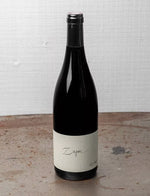
Zapoï Red 2020

Les En Hauts

Out of stock

Red Gamay wine from the Beaujolais region, fruity and silky.

Victim of its own success!

Try these gems instead:

France - Beaujolais

12.5°

Grape varieties: Gamay

Capacity: 75 cl

Vintage: 2020

Learn more about the bottle:

Zapoï Rouge 2020

Les En Hauts


Rather gurgling but with substance, silky and velvety, dry and tangy, this delicious and indulgent wine offers a rather animal nose with notes of hay. On the palate, cherry, a lovely length, and a nice acidity. Zapoï, a cuvée from the Les En-Hauts project, is the result of the joint effort of winemakers Damien Coquelet and Frédéric Cossard. It comes from fifty-year-old Gamay vines growing in Beaujolais. It is the result of whole-bunch semicarbonic maceration, and is aged for ten months in concrete eggs.

The word "Zapoï" makes you think of Groland, obviously, but do you know the origin of the term? Zapoï is a Russian practice consisting of a binge lasting several days, the result of prolonged alcohol consumption. A proper zapoï should lead to a blackout (you don't remember anything), and regular awakenings where you get drunk again to avoid a hangover. In some cases, you wake up far from home in the snow. This scourge on life expectancy, fortunately, has only a very distant logical connection with the wine we are concerned with here. Let's just say that, presumably, the sound of the name appealed to the two winemakers.

Find out more


Les En-Hauts is not strictly speaking a wine estate but a project of vintages produced in partnership between Damien Coquelet and Frédéric Cossard. These two great figures of Burgundy viticulture—yes, Beaujolais is in Burgundy—had every reason to join forces to create colorful and flavorful vintages together.

Frédéric Cossard is a biodynamic and natural star of Burgundy winemaking, who gives voice to Burgundy's terroirs and wines, undeformed by agricultural chemicals. His vintages are pure and elegant without artifice and are among the most sought-after in Burgundy. His practice is not limited to Burgundy, as some vintages are made from grapes purchased in other regions. His vines are cared for according to the principles of biodynamics: homeopathic treatments based on essential oils, copper, and sulfur in minimal doses. The harvest is entirely manual, carried out at full maturity.

Damien Coquelet, for his part, is the worthy successor of the great organic winegrowers to whom we owe the advent of nature in the Beaujolais region: he is the son-in-law of Georges Descombes and Jean Foillard was his mentor, continuators of the pioneering work of Jules Chauvet and Marcel Lapierre. Owning nine hectares in Morgon on granite-sandy soils, he cultivates two and a half hectares plus a few leased vines: in all, four hectares on the legendary Côte du Py. A specialist in Morgons that Morgonnent and Chiroubles that Chiroublent, he embodies the true nature of Beaujolais.

Delivery 48h to 72h (Metropolitan France)

Personalized advice and responsive customer service

Rare references and hard-to-find gems

Secure Payment

Learn more about the bottle....

Zapoï Rouge 2020

Les En Hauts


Rather gurgling but with substance, silky and velvety, dry and tangy, this delicious and indulgent wine offers a rather animal nose with notes of hay. On the palate, cherry, a lovely length, and a nice acidity. Zapoï, a cuvée from the Les En-Hauts project, is the result of the joint effort of winemakers Damien Coquelet and Frédéric Cossard. It comes from fifty-year-old Gamay vines growing in Beaujolais. It is the result of whole-bunch semicarbonic maceration, and is aged for ten months in concrete eggs.

The word "Zapoï" makes you think of Groland, obviously, but do you know the origin of the term? Zapoï is a Russian practice consisting of a binge lasting several days, the result of prolonged alcohol consumption. A proper zapoï should lead to a blackout (you don't remember anything), and regular awakenings where you get drunk again to avoid a hangover. In some cases, you wake up far from home in the snow. This scourge on life expectancy, fortunately, has only a very distant logical connection with the wine we are concerned with here. Let's just say that, presumably, the sound of the name appealed to the two winemakers.

Find out more


Les En-Hauts is not strictly speaking a wine estate but a project of vintages produced in partnership between Damien Coquelet and Frédéric Cossard. These two great figures of Burgundy viticulture—yes, Beaujolais is in Burgundy—had every reason to join forces to create colorful and flavorful vintages together.

Frédéric Cossard is a biodynamic and natural star of Burgundy winemaking, who gives voice to Burgundy's terroirs and wines, undeformed by agricultural chemicals. His vintages are pure and elegant without artifice and are among the most sought-after in Burgundy. His practice is not limited to Burgundy, as some vintages are made from grapes purchased in other regions. His vines are cared for according to the principles of biodynamics: homeopathic treatments based on essential oils, copper, and sulfur in minimal doses. The harvest is entirely manual, carried out at full maturity.

Damien Coquelet, for his part, is the worthy successor of the great organic winegrowers to whom we owe the advent of nature in the Beaujolais region: he is the son-in-law of Georges Descombes and Jean Foillard was his mentor, continuators of the pioneering work of Jules Chauvet and Marcel Lapierre. Owning nine hectares in Morgon on granite-sandy soils, he cultivates two and a half hectares plus a few leased vines: in all, four hectares on the legendary Côte du Py. A specialist in Morgons that Morgonnent and Chiroubles that Chiroublent, he embodies the true nature of Beaujolais.