Confirmez votre âge
Vous devez être âgé(e) de 18 ans minimum pour naviguer sur ce site.


In stock - Ready to be shipped

Fumé

Poivré

Fruits Rouges

Rose
Ample
Boisé
Complexe
Floral
Frais
Fruité
Glouglou
Léger
Liquoreux
Minéral
Oxydatif
Perlant
Puissant
Rond
Salinité
Sec
Tannique
Tendu

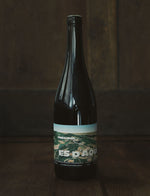
With a beautiful, vibrant ruby color, it offers a nose of pepper, rose, and strawberry, as well as notes of garrigue, candied black olive, and prune. Lively and powerful. This 100% Cinsault, grown on the schist soils of Berlou, near Saint-Chinian, is produced by fermentation with indigenous yeasts over twenty-eight days of whole-bunch maceration in sandstone jars, where the wine is also aged.
A native of Ariège, Jean-Louis Pinto chose to stay in the region and make wines that reflect their terroir, hence the name Es d’Aqui (“It’s from here”), which he gave to his winemaking business, located in Moulin-Neuf, a commune near the Aude department, between Mirepoix and Limoux. A region where vines once abounded, until the major mildew attacks at the beginning of the 20th century. Jean-Louis buys grapes grown organically by other winegrowers, his friends, whom he trusts completely. He doesn't just buy the product; he monitors the fruit set and ripening, and makes regular visits until August to get to know the grapes before harvesting them. He vinifies them at home using natural methods, practicing long macerations on whole bunches. A three-week maceration is common for him, as are very gentle pressings in a vertical press. He says he has "a lot of vines in common" with his friend Anthony Tortul (La Sorga). His collection area extends throughout the Languedoc, particularly in the Hérault, around Adissan, Faugères and Saint-Chinian, as well as in the Aude (Limoux) and Tarn (Gaillac), two terroirs that are dear to him. It turns out that the typical Languedoc soils – schist, basalt, pebbles, clay-siliceous – particularly appeal to him for the freshness they give to the wines. “I make wines from the South,” he says. “I mainly look for terroirs that give freshness, even if the wines have an alcohol content of 14 degrees.” The grape varieties are, of course, typically Languedoc: Grenache, Carignan, Mauzac, Cinsault, Braucol, Duras and Sauvignon. The most powerful reds are made in five terracotta jars, which help him control extraction and give his wines, he says, "a very crystalline side." The soil, the location, as we understand it, are of the utmost importance to him: once again, the name of his estate Es d'Aqui was not chosen by chance.