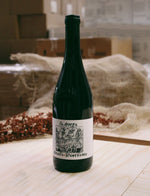
Grande Pestilence Rouge 2019
Antony Tortul loves old vineyards: he devotes his life to finding and vinifying them. Just as there are landless shepherds, he can be defined as a landless winegrower, in other words, a wine merchant whose area of activity extends throughout Languedoc and, eastward, as far as Châteauneuf-du-Pape, in search of the best terroirs. Born in Foix, with six years of experience as a wine technician and oenologist in various vineyards in the south of France, he created La Sorga in 2008. His enthusiasm leads him on a path filled with favorites, and each of these favorites is a vineyard. The result is a dizzying mosaic of natural, lively, and spirited wines, which reinvents itself each year with around thirty cuvées per vintage. Few winemakers can list such a variety of grape varieties on their menu: the whole of southern France is there with muscats, grenaches, picpoul, mauzac, carignan, cinsault, marsanne, alicante, braucol, duras, viognier, len-de-l’el, and tutti quanti.
The label and the name with their pestilential connotations should not make this wine pass for what it is not: no morbid stench will disturb your experience once the bottle is opened. The nose, on the contrary, is of great aromatic complexity: black fruits, humus, white pepper, peony, and on the palate the citrus peel typical of the schist soils of the Faugères region and particularly Cabrerolles, from which this wine comes. The texture is very rounded, the finish is long and already very straight! No sulfites, no filtration, nothing else for that matter. The blend is made from sixty percent Cinsault (sixty-five-year-old vines), twenty percent Grenache (sixty-five-year-old vines), and twenty percent Carignan (sixty-five-year-old vines). Vinification is done in whole bunches in a quasi-infusion for sixty days for Cinsault and forty-five days for the other grape varieties. Once everything is blended, aging is one year in vats. It will keep well for a good ten years.
Natural wine with no added sulfites.