Confirm your age
You must be at least 18 years old to browse this site.


Sufficient
Woody
Complex
Floral
Fees
Fruity
Gobble
Light
Sweet (wine)
Mineral
Oxidative
Beading
Powerful
Round
Salinity
Dry
Tannic
Strained

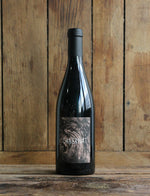
Cabernat is a red wine with no additives or added sulfur, made from Cabernet Sauvignon grown on east-facing plots on clay-gravel soils. The grape variety has the particularity, for this cuvée, of being harvested slightly overripe. The average age of the vines is fifteen years. The planting of cover crops allows for soil decompaction and provides nutritional support, alternating with natural grass cover. The harvest is destemmed and macerated carbonically with pressing in the first third of fermentation. Alcoholic fermentation ends in the liquid phase. Aging is six months on lees in stainless steel vats. Drink this first natural cuvée from Simon Capmartin within the year: it may surprise you upon opening with the presence of carbon dioxide and appear quite closed. The winemaker strongly recommends careful decanting, which will allow beautiful notes of ripe fruit to emerge that are "quite stunning" (we quote).
Guy Capmartin settled in 1985 in the former convent of Maumusson-Laguian, in the Gers, to exploit the magnificent surrounding soils, from which he would soon produce highly acclaimed wines in the Madiran and Pacherenc-du-Vic-Bilh appellations. In 1987, Tradition, his first cuvée, was born. In the 2000s, he decided to work exclusively in organic and biodynamic agriculture, a decision reinforced and entrenched by his son Simon, who took over. The wines were noted and received numerous awards. Certification was obtained in 2013, the Demeter label is in progress. Taking advantage of his most specific plots of the estate, Simon also undertakes to produce natural cuvées, without input and according to the principle of minimal interventionism. Labeled Vin de France or Côtes-de-Gascogne, these are the cuvées that we offer you at Culinaries.
The estate's grape varieties are organized around Tannat, the king of Madiran, surrounded by a palette as rich and diverse as the estate's soils: Cabernet Sauvignon, Cabernet Franc, a little Syrah and Grenache Noir, plus a few old red vines currently being identified. A plot of Tannat, located on a very fine and very supple clay-marl soil with gravel, is pre-phylloxera. For the white, Petit Manseng, Gros Manseng and Petit Courbu, as well as, for the Côtes-de-Gascogne, Sauvignon Blanc, Sauvignon Gris and Viognier.
The main objective of the Capmartin estate is to make frank, fruity, authentic and honest wines, perfectly reflecting their terroir, which explains the parcel-based nature of the wines under the appellation: one parcel corresponds to one vintage, and vice versa. This also explains the number and variety of vintages.