Confirmez votre âge
Vous devez être âgé(e) de 18 ans minimum pour naviguer sur ce site.


Agrumes

Fleurs blanches

Poire

Salinité
Ample
Boisé
Complexe
Floral
Frais
Fruité
Glouglou
Léger
Liquoreux
Minéral
Oxydatif
Perlant
Puissant
Rond
Salinité
Sec
Tannique
Tendu

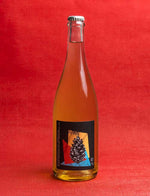
The color is a very pale blond, like a linden infusion, slightly cloudy; La Pinya is a fresh, mineral, and aromatic dry white wine, lively and delicate, with a possible sparkle upon opening. In Belly Wine Experiment, there is Experiment, or experimentation. It's a principle that this small organic and natural wine merchant estate strives to demonstrate vintage after vintage. La Pinya, labeled with a pine cone, is a blend of equal parts of two indigenous Catalan grape varieties: Xarel lo and Macabeu from Pla del Penedès, harvested on clay-limestone soils. This blend is quite common in Catalonia, Claire Sage's native country. For this vintage, the Macabeu is worked directly from the press, then blended with crushed Xarel·lo. The whole thing is macerated for a week. This wine is organically grown and has received no chemical additives or sulfites, in the vineyard or in the cellar. Note that the natural formation of tartar may cause a slight foam when the bottle is opened. La Pinya should be stored upright and drunk chilled.
Find out more
Founded and run by Claire Sage and Aimé Duveau, located in Chanteuges (Haute-Loire), Belly Wine Experiment is as much an experiment as a winemaking business. The creative duo has a lot to offer: Claire is the sister of Daniel Sage, a fan of underwater wine aging but above all an importer of Catalan wines. Hence the presence of Catalan grape varieties in Belly Wine Experiment's blends, alongside Burgundy, Auvergne, and Jura grape varieties, readily found in the same bottle. Aimé is the son of Manu Duveau, a poet-winemaker from Auvergne, a former stonemason, and a great winemaker of local Gamays at his Domaine de l'Égrappille. The uniqueness of Belly Wine Experiment is the exoticism (in the literal sense) of the blends, with Xarel lo from Catalonia, for example, being able to sit alongside Gamay from Puy-de-Dôme with the utmost naturalness. The wines are made using semicarbonic maceration, without the addition of chemical additives or excessive manipulation in the cellar. The house is also known for its very high-quality, vinous perries.