Confirmez votre âge
Vous devez être âgé(e) de 18 ans minimum pour naviguer sur ce site.


Fruits Rouges
Ample
Boisé
Complexe
Floral
Frais
Fruité
Glouglou
Léger
Liquoreux
Minéral
Oxydatif
Perlant
Puissant
Rond
Salinité
Sec
Tannique
Tendu

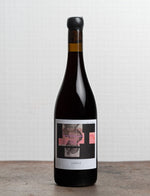
Sémélé, exclusively from Culinaries, is an organic and natural rosé wine from the island of Samos (Greece) that is part of Patrick Bouju's Sous le Végétal project in partnership with Culinaries. Its name alludes to the myth of Semele, mistress of Zeus and mother of Dionysus, god of Wine and Intoxication.
In the Vineyard
Sous le Végétal vintages are primarily based on Samos Muscat à petits grains and, more rarely, on other local grape varieties. Here, the red Avgoustiatis grape variety is blended in equal parts with Muscat. The vines are managed biodynamically and in permaculture.
In the cellar
A blend of avgoustiatis (a very common red grape variety in Greece) macerated for a week and directly pressed muscat, all organic, Sémélé is neither filtered nor fined.
Tasting
With its deep, lively and seductive color, its fruitiness of strawberry and raspberry and its lovely tannins, Sémélé is a natural rosé that leans towards a light red. It will go well with tapas, mezes, starters and Mediterranean dishes: we recommend pairing it with taramas by Lionel Durot, with smoked fish or seafood hors d'oeuvres by Saumon de France, or with the delicious poutargue de Martigues by Frédéric Paez.
Under the plant lies the mineral: this is the meaning of this concept of natural and additive-free vintages exclusively for Culinaries, produced in Greece, on the island of Samos, by a team gathered around Patrick Bouju. Sous le Végétal also takes under its wing the vintages A la Natural signed by Patrick Bouju.
History (and geography)
Sous le Végétal marks the rebirth of the thousand-year-old vineyard of this island in the eastern Aegean Sea with its dense, wooded vegetation. This rich plant life covers a unique and varied subsoil: volcanic rocks (basalts), limestone, quartz, pink granites, schists, iron cast iron... In Sous le Végétal, the winemakers of Samos rediscover the wine they made in their childhood, proving once again that natural wine allows, through innovative projects, to reconnect with forgotten traditions.
Grape varieties and vinification
Four of the seven vintages of Sous le Végétal — Livia, Hüpnos, Octave, Palli & Genesia and Auguste — are produced on around sixty plots of Samos muscat à petits grains between 400 and 910 meters above sea level. The other vintages, Auguste, Alexandre and Sémélé, are respectively based on avgoustiatis or asyrtiko, blended or not with Samos muscat. Each plot is vinified separately. Four types of winemaking containers are used: amphorae, concrete eggs, stainless steel vats, and 500-liter barrels. Each lieu-dit is vinified in at least two of the four containers, and the wine is aged in black, wax-sealed bottles. No sulfites are added or filtration is performed.