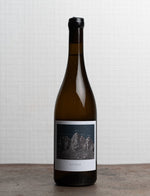
Octave (exclusive vintage) White 2022,
Octave is an organic, biodynamic, and natural dry white wine from the terroir of the island of Samos, in the eastern Aegean Sea. It is a vintage belonging to the Sous le Végétal project, exclusively for Culinaries, created by Patrick Bouju on the island of Samos (Greece). Octave is made entirely from Samos small grain muscat grown in the localities of Pagondas, Karvounis and Platanos — eight plots from four terroirs, okto meaning “eight” in Greek.
Eight plots, four terroirs
Octave reflects the mineral variety of the island of Samos through these eight plots from which it comes: the salinity of the limestone, the freshness of the quartz, the austerity of the basalt and the tension of the schist. The iodized aromas of the muscat remain elegant, avoiding the heaviness of the grape variety. Octave is a complex natural wine that extends into a mineral finish. It will flourish in a carafe and will be very comfortable with seafood products such as the specialties of
Saumon de France (smoked fish and rillettes) or oysters from
Yvonnick Jegat or from the
Ferme marine d’Artouan.
In the vineyard and at the cellar
The vines are harvested by hand in the early morning, and the grapes are macerated in whole bunches. The free-run juice is vinified without pumping over, aeration, or stabilization. Only settling and topping up are carried out. Fermentation takes place in 750-liter amphorae and 1,400-liter concrete eggs. Octave is without additives, unfiltered, and bottled by gravity; the black bottles are used for aging and maturation. Around the (organic) cap, the closure is made of paraffin and black beeswax.
Learn more about Sous le Végétal
Under the plant lies the mineral: this is the meaning of this concept of natural vintages exclusively from Culinaries, created in Greece, on the island of Samos, by a team gathered around
Patrick Bouju. Sous le Végétal also takes under its wing the vintages
A la Natural signed Patrick Bouju.
History
Sous le Végétal marks the rebirth of the thousand-year-old vineyard of this island in the eastern Aegean Sea with its dense, wooded vegetation. This rich plant life covers a unique and varied subsoil: volcanic rocks (basalts), limestone, quartz, pink granites, schists, iron cast iron... In Sous le Végétal, the winemakers of Samos rediscover the wine they made in their childhood, proving once again that natural wine allows, through innovative projects, to reconnect with forgotten traditions.
Grape varieties and vinification
Four of the seven vintages of Sous le Végétal — Livia, Hüpnos, Octave, Palli & Genesia and Auguste — are produced on around sixty plots of Samos muscat à petits grains between 400 and 910 meters above sea level. The other vintages, Auguste, Alexandre and Sémélé, are respectively based on avgoustiatis, asyrtiko and a blend of Samos muscat and avgoustiatis. Each plot is vinified separately. Four types of winemaking containers are used: amphorae, concrete eggs, stainless steel vats, and 500-liter barrels. Each plot is vinified in at least two of the four containers, and the wine is aged in black, wax-sealed bottles. No sulfites are added, and no filtration is used.